Budapest: an introduction to the Danube capital
Read Budapest through Buda, Pest, Óbuda, the Danube, historic architecture and the city’s bathing tradition. The purpose is to understand the place through enduring geography, architecture and culture, concentrating on stable context and connections that support thoughtful orientation.
Three cities in one
Buda, Pest and Óbuda retain different topographies and urban characters. The castle hill, the eastern plain and the Roman northern district offer complementary ways into the capital.
Budapest: an introduction to the Danube capital — Three cities in one. This is more useful than a checklist because it gives the place a readable structure. Materials, scale and the relationship with the surrounding landscape reveal how a monument or district belongs to a wider Hungarian story.
Budapest: an introduction to the Danube capital. Moving between the broad view and close detail clarifies the subject. Once the overall structure is visible, materials and small transitions can be revisited with better questions, turning a sequence of stops into interpretation. Seen in this way, the subject becomes part of a connected city or regional narrative rather than a detached stop.
The river as an organising line
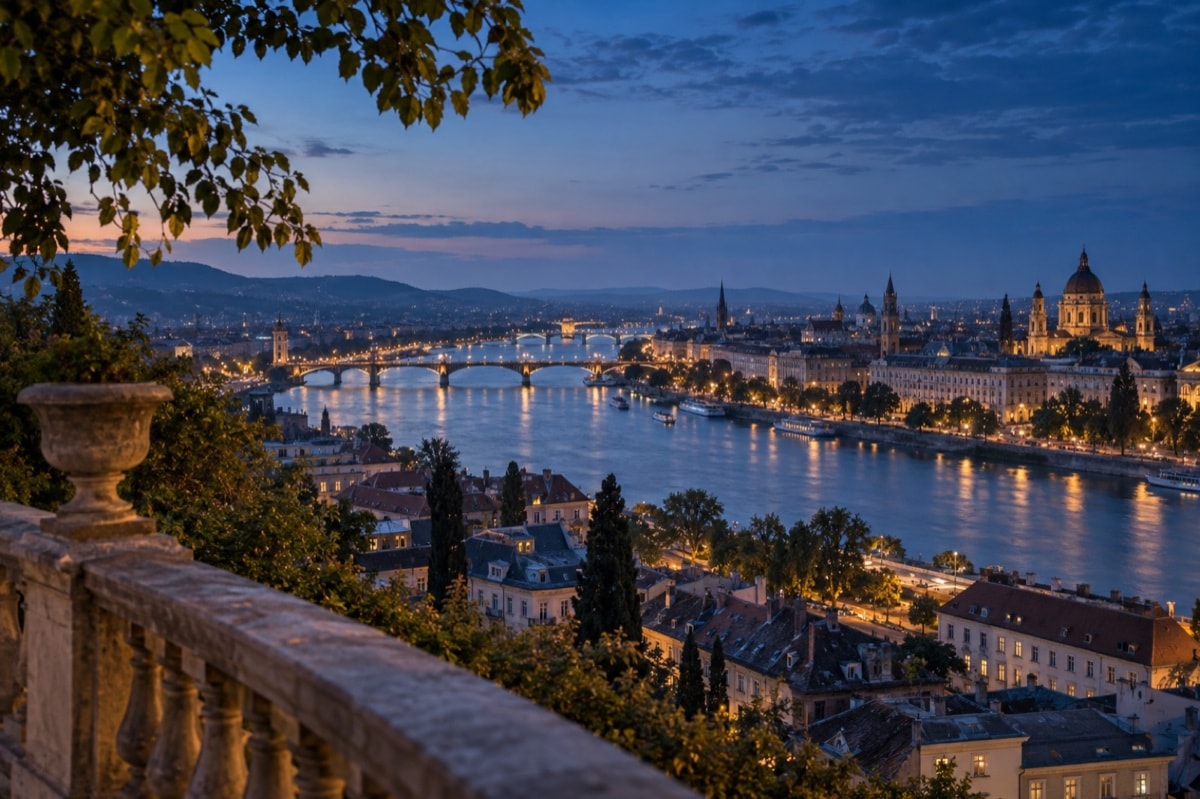
The Danube aligns Parliament, the Castle Quarter, historic bridges and Gellért Hill. Moving between banks turns the skyline into a practical map.
Budapest: an introduction to the Danube capital — The river as an organising line. A thoughtful visit works through comparison: hill and plain, water and street, ceremonial architecture and ordinary neighbourhoods. Those contrasts make local identity tangible without turning the journey into a ranking of attractions.
Budapest: an introduction to the Danube capital. Change over time belongs to the story. Repair, reuse and altered landscapes do not simply erase the past; they reveal how communities have chosen to preserve or reinterpret it. Seen in this way, the subject becomes part of a connected city or regional narrative rather than a detached stop.
Layers of architecture
Roman remains, medieval walls, Ottoman baths, historicist boulevards and Art Nouveau details coexist within a compact city. The transitions are as revealing as the monuments.
Budapest: an introduction to the Danube capital — Layers of architecture. The aim is not to collect stops but to connect them. A slow walk, a view back across the river or a pause in a public square often explains the geography more clearly than an isolated landmark description.
Budapest: an introduction to the Danube capital. The relationship between public space and everyday use is decisive. A building or landscape gains meaning when one notices who crosses it, which routes it encourages and where it creates room to pause. Seen in this way, the subject becomes part of a connected city or regional narrative rather than a detached stop.
Bathing culture
Budapest’s thermal tradition belongs to geology, architecture and daily social life. Ottoman domes, tiled halls and outdoor pools express different periods.
Budapest: an introduction to the Danube capital — Bathing culture. Practical arrangements can change, so this page concentrates on enduring history, architecture and cultural context. On-site notices and responsible authorities remain the appropriate source for conditions that vary.
Budapest: an introduction to the Danube capital. Photography and memory always select a viewpoint. Changing side, height or distance helps prevent the best-known image from standing in for the complete identity of a place. Seen in this way, the subject becomes part of a connected city or regional narrative rather than a detached stop.
A district-based visit
Castle Hill, central Pest, Óbuda and Városliget each reward focused time. Grouping places by area creates a clearer experience than crossing the city for isolated stops.
Budapest: an introduction to the Danube capital — A district-based visit. Hungarian names carry essential accents. Keeping forms such as Széchenyi, Gellért, Hévíz and Siófok intact is both accurate and respectful, and it prevents distinct places from dissolving into approximate spellings.
Budapest: an introduction to the Danube capital. Regional continuity often appears in materials and repeated gestures. Stone, plaster, timber, water and planting form a vocabulary that returns with variations across apparently separate locations. Seen in this way, the subject becomes part of a connected city or regional narrative rather than a detached stop.
How to use this guide
Budapest: an introduction to the Danube capital. Begin with one geographic line — the Danube, a lakeshore, a hill district or the open plain — and let nearby themes branch from it. This keeps travel time intelligible and makes historical relationships visible. A bath, a museum and a streetscape can then illuminate one another instead of competing for attention.
Budapest: an introduction to the Danube capital. Conditions of entry, transport details and local rules can change. The guide therefore keeps its focus on durable context and points readers to responsible authorities for anything time-sensitive. That distinction protects both accuracy and the pleasure of discovery.
A closer way of seeing
Budapest: an introduction to the Danube capital is best approached through relationships rather than superlatives. Notice how water, relief, streets and public buildings shape one another, then compare that pattern with a nearby district or region. The resulting differences provide a more reliable sense of place than a hurried catalogue of famous names.
Budapest: an introduction to the Danube capital. Language is another part of the landscape. Place names preserve sounds and histories that disappear when accents are removed, while local terms often distinguish practices for which English has only a broad equivalent. Reading those words carefully makes signs easier to recognise and keeps cultural distinctions intact.
Budapest: an introduction to the Danube capital. Finally, leave room for ordinary spaces. A residential street, a tree-lined edge, a riverside path or the transition between town and field can explain why a celebrated monument stands where it does. That wider attention turns individual sights into a coherent understanding of Hungary.
Continue exploring
Budapest: an introduction to the Danube capital. Use this page as a starting point for connections rather than a race through names. The related guides link landscape, history and urban character into a coherent route. This is an editorial guide: it provides context and orientation, while details that may change belong with the responsible local sources.